Hey guys it's Doctor Hebdon,
Earlier today you may have seen me post this quote on our facebook: Resilience isn’t the absence of pressure — it’s the ability to adapt under it. Thats what I want to talk about today
This morning I watched a hawk lift prey that looked almost bigger than it. It gripped it, adjusted midair, and carried it away without hesitation.
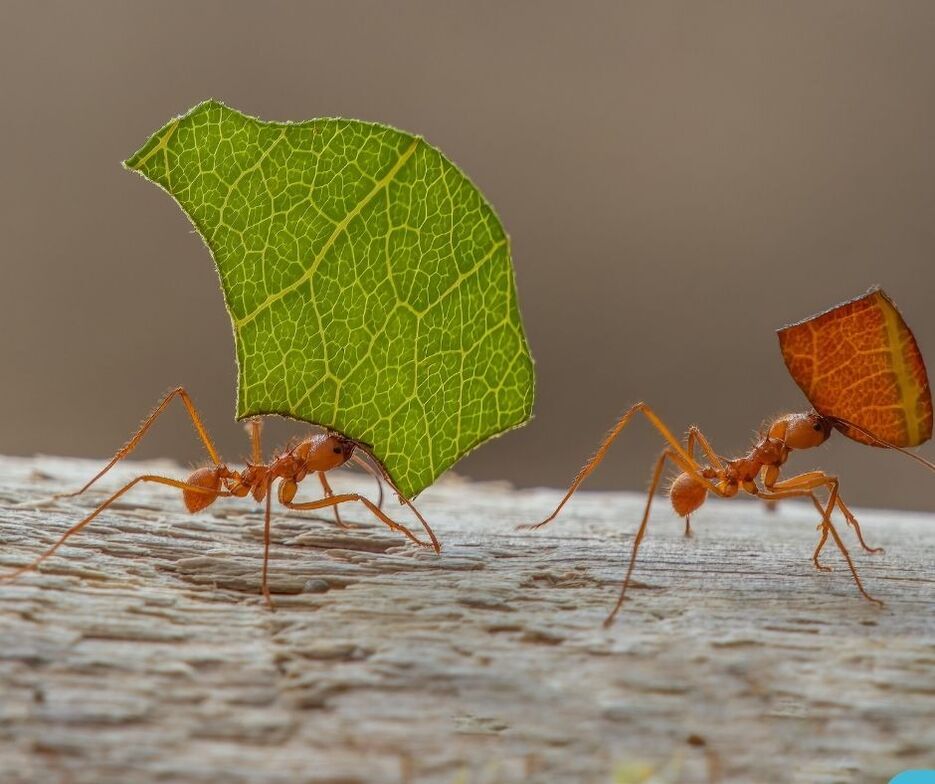
And you know how we’ve all seen ants dragging something that seems impossibly large for their size? A crumb. A leaf. A piece of bread. Slowly. Persistently. Without questioning whether it’s “too much.”
Those images stayed with me.
Because sometimes what we are carrying feels bigger than us too.
Parenthood. Business ownership. Hormonal changes. Sleep deprivation. Emotional weight. Chronic pain. Financial pressure. Responsibility.
Resiliency is not the absence of stress. It is adaptability under it.
Stress Doesn’t Disappear — We Adapt
One of the most common things I hear in practice is:
“I just have to get through this month.”
“Once this week is over, things will calm down.”
“Once the kids are older.”
“Once this pain goes away.”
But here’s the truth:
Stress does not go away. We learn to adapt to it.
Life moves in seasons. Demands change. Responsibilities shift. But there is always something that asks something of us.
From a physiological standpoint, our bodies are designed to respond to stress. Research describes something called allostatic load — the cumulative effect of repeated stress on the body (McEwen, 2007). The goal is not eliminating stress entirely. The goal is improving how we regulate and recover from it.
Waiting for stress to disappear keeps you stuck.
Building resilience moves you forward.
The Hawk: Acute Stress Is Healthy
When the hawk lifts its prey, its nervous system activates. Heart rate increases. Muscles fire. Focus sharpens.
This is acute stress — and it’s not the enemy.
In fact, short bursts of stress can temporarily reduce pain perception, a phenomenon known as stress-induced analgesia (Butler & Finn, 2009). The sympathetic nervous system mobilizes the body for action.
We are built for activation.
The issue arises when we never downshift. When stress becomes chronic without adequate recovery.
The Ant: Chronic Load and a Sensitive Nervous System
The ant represents something different. Not a burst — but repetition. Carrying something disproportionately large over time.
Chronic stress — physical or emotional — can alter how the nervous system processes signals. Research shows prolonged stress exposure can:
-
Increase inflammation
-
Lower pain thresholds
-
Contribute to central sensitization
-
Amplify pain perception (Woolf, 2011)
Central sensitization means the nervous system becomes more reactive. The volume knob gets turned up. Sensations that once felt manageable may now feel overwhelming.
This doesn’t mean pain is imagined.
It means the system carrying the load has become overwhelmed.
Resilience Changes the Pain Experience
Here is the hopeful part.
Resilience doesn’t mean pain disappears. It means your nervous system becomes more adaptable.
Studies show individuals with higher psychological resilience experience:
-
Lower pain-related disability
-
Less catastrophizing
-
Better emotional regulation
-
Improved functional outcomes (Sturgeon & Zautra, 2010; Goubert & Trompetter, 2017)
Pain is processed in multiple areas of the brain — including the amygdala (threat detection) and the prefrontal cortex (regulation). Resilience strengthens the brain’s ability to regulate threat signals.
In simple terms:
The load may not get lighter.
But the system carrying it can get stronger.
Rest Is Productive
I recently saw a pin that said, “Rest is productive.”
And that resonated deeply.
Resilience is not constant output. It is oscillation.
Recovery is where repair happens. It’s where inflammation decreases. It’s where the parasympathetic nervous system — the “rest and digest” system — takes the lead.
Sleep research shows that inadequate sleep increases pain sensitivity and inflammatory markers (Finan, Goodin & Smith, 2013). Without rest, the stress cycle remains open.
The hawk rests after it hunts.
The ant pauses before carrying again.
Your nervous system is designed to move between activation and recovery.
Rest is not weakness.
Rest is recalibration.
You Don’t Have to Wait for Calm
If you’re telling yourself, “I just need things to settle down,” I want to gently offer this:
There is always another season coming.
Resilience is not built when everything is calm. It is built in the presence of stress through small, consistent regulation.
Evidence-based ways to build resilience include:
-
Gradual, progressive movement (Geneen et al., 2017)
-
Reducing fear around pain and reintroducing activity (Vlaeyen & Linton, 2012)
-
Strengthening social connection
-
Improving sleep hygiene
-
Practicing nervous system regulation
Resilience is trainable.
A Note for Those in Pain
If what you’re carrying feels bigger than you right now, that does not mean you are weak.
It may mean your nervous system is overwhelmed.
In chiropractic care, part of what we focus on is restoring movement, improving proprioceptive input, reducing muscular guarding, and supporting nervous system regulation. We cannot always remove the load immediately.
But we can build the system carrying it.
Movement builds tolerance.
Tolerance builds confidence.
Confidence builds resilience.
Closing Reflection
The hawk doesn’t ask whether the prey is too heavy.
The ant doesn’t measure whether the crumb is larger than it.
They adapt.
Stress does not go away.
We learn to adapt to it.
And sometimes, the most resilient thing you can do is rest.
References
Blackburn-Munro, G., & Blackburn-Munro, R. E. (2001). Chronic pain, chronic stress and depression: Coincidence or consequence? Journal of Neuroendocrinology, 13(12), 1009–1023. https://doi.org/10.1046/j.1365-2826.2001.00727.x
Butler, R. K., & Finn, D. P. (2009). Stress-induced analgesia. Progress in Neurobiology, 88(3), 184–202. https://doi.org/10.1016/j.pneurobio.2009.04.003
Finan, P. H., Goodin, B. R., & Smith, M. T. (2013). The association of sleep and pain: An update and a path forward. Sleep Medicine Reviews, 17(2), 153–164. https://doi.org/10.1016/j.smrv.2012.05.003
Geneen, L. J., Moore, R. A., Clarke, C., Martin, D., Colvin, L. A., & Smith, B. H. (2017). Physical activity and exercise for chronic pain in adults: An overview of Cochrane Reviews. Cochrane Database of Systematic Reviews, 2017(4), CD011279. https://doi.org/10.1002/14651858.CD011279.pub3
Goubert, L., & Trompetter, H. (2017). Towards a science and practice of resilience in the face of pain. European Journal of Pain, 21(8), 1301–1315. https://doi.org/10.1002/ejp.1062
McEwen, B. S. (2007). Physiology and neurobiology of stress and adaptation: Central role of the brain. Physiological Reviews, 87(3), 873–904. https://doi.org/10.1152/physrev.00041.2006
Sturgeon, J. A., & Zautra, A. J. (2010). Resilience: A new paradigm for adaptation to chronic pain. Current Pain and Headache Reports, 14(2), 105–112. https://doi.org/10.1007/s11916-010-0095-9
Veehof, M. M., Oskam, M. J., Schreurs, K. M. G., & Bohlmeijer, E. T. (2011). Acceptance-based interventions for the treatment of chronic pain: A systematic review and meta-analysis. Clinical Journal of Pain, 27(6), 533–542. https://doi.org/10.1097/AJP.0b013e31820a7a79
Vlaeyen, J. W. S., & Linton, S. J. (2012). Fear-avoidance model of chronic musculoskeletal pain: 12 years on. Pain, 153(6), 1144–1147. https://doi.org/10.1016/j.pain.2011.12.009
Woolf, C. J. (2011). Central sensitization: Implications for the diagnosis and treatment of pain. Pain, 152(3 Suppl), S2–S15. https://doi.org/10.1016/j.pain.2010.09.030

Nadine Hebdon
Contact Me